

Status
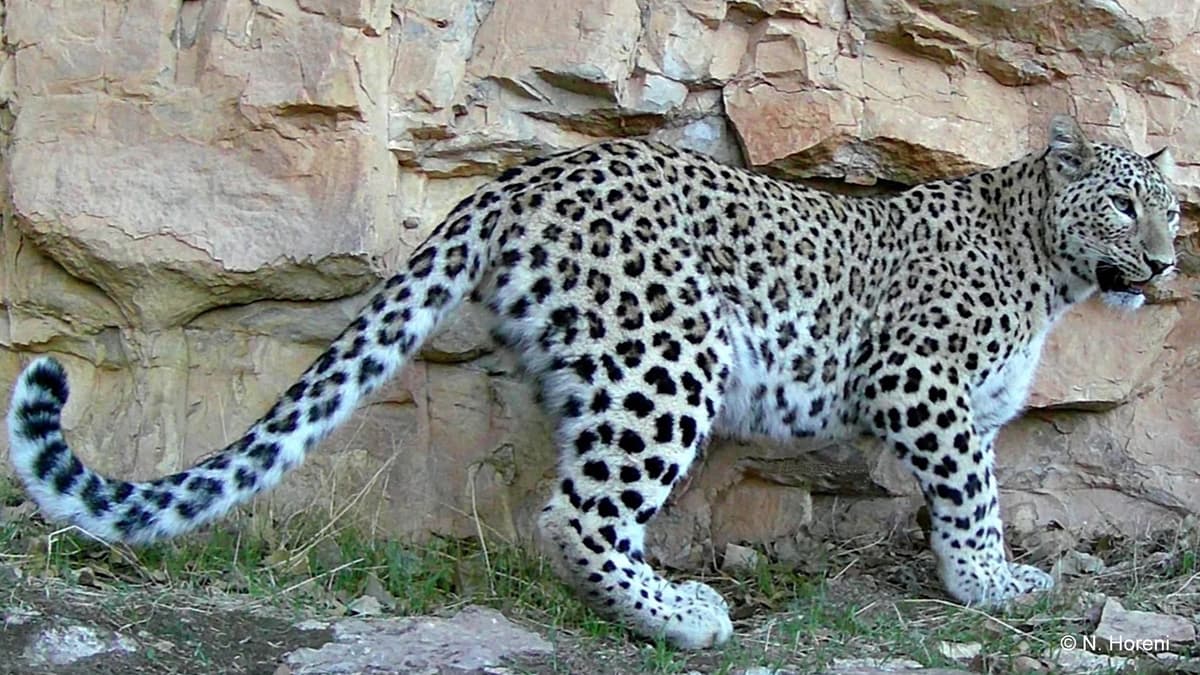
According to the most recent IUCN Red List assessment, the Persian leopard (Panthera pardus tulliana) is a globally endangered big cat present in nine countries (Afghanistan, Armenia, Azerbaijan, Iran, Iraq/Kurdistan, Pakistan, Russia, Türkiye and Turkmenistan), occasionally occurring in Georgia and Kazakhstan, possibly present in Uzbekistan, and extinct in Tajikistan, Syria and Lebanon. The total population size is estimated to be between 750-1044 individuals. Iran hosts the largest population (528-732 individuals), followed by Turkmenistan (60-80 individuals). The Persian leopard occurs in a variety of habitats but prefers mountain ranges covered with forests, woodlands, and scrublands, with an essential presence of rocky outcrops and precipitous slopes. Wild ungulates make most of its prey (80-95%), including the urial (Ovis vignei), bezoar goat (Capra aegagrus), wild boar (Sus scrofa), goitered gazelle (Gazella subgutturosa) and other species. Wherever wild prey is scarce, or opportunities arise, leopards may kill smaller species and domestic animals.
More recently, we made a Green List assessment of the Persian leopard to estimate its potential for recovery due to conservation activities. It is classified as largely depleted. The Persian leopard's conservation legacy is low because, even without conservation in the past, these felids would still be projected to survive in most areas. The zero conservation gain and dependence do not mean that Persian leopard conservation is worthless. Instead, they reflect that, given the life history of leopards and the fact that much of their distribution already occurs outside protected areas, a 10-year timeframe specified by the Green List guidelines is too short to expect significant change in the conservation status of the Persian leopard. In the meantime, the recovery potential of this big cat over 100 years is expected to be medium, and several populations can become viable and even functional if their conservation is implemented continuously, on a large scale, and effectively.
The main threats to the survival of Persian leopards throughout their range are the following:
- Illegal hunting in response to leopard attacks on domestic animals, especially livestock, or for trophies
- Prey depletion because of illegal hunting, overgrazing and habitat loss
- Habitat loss and fragmentation causing the disruption of population connectivity